Be yourself; Everyone else is already taken.
— Oscar Wilde.
This is the first post on my new blog. I’m just getting this new blog going, so stay tuned for more. Subscribe below to get notified when I post new updates.
Come read my thoughts on the astronomy and the universe!
Be yourself; Everyone else is already taken.
— Oscar Wilde.
This is the first post on my new blog. I’m just getting this new blog going, so stay tuned for more. Subscribe below to get notified when I post new updates.
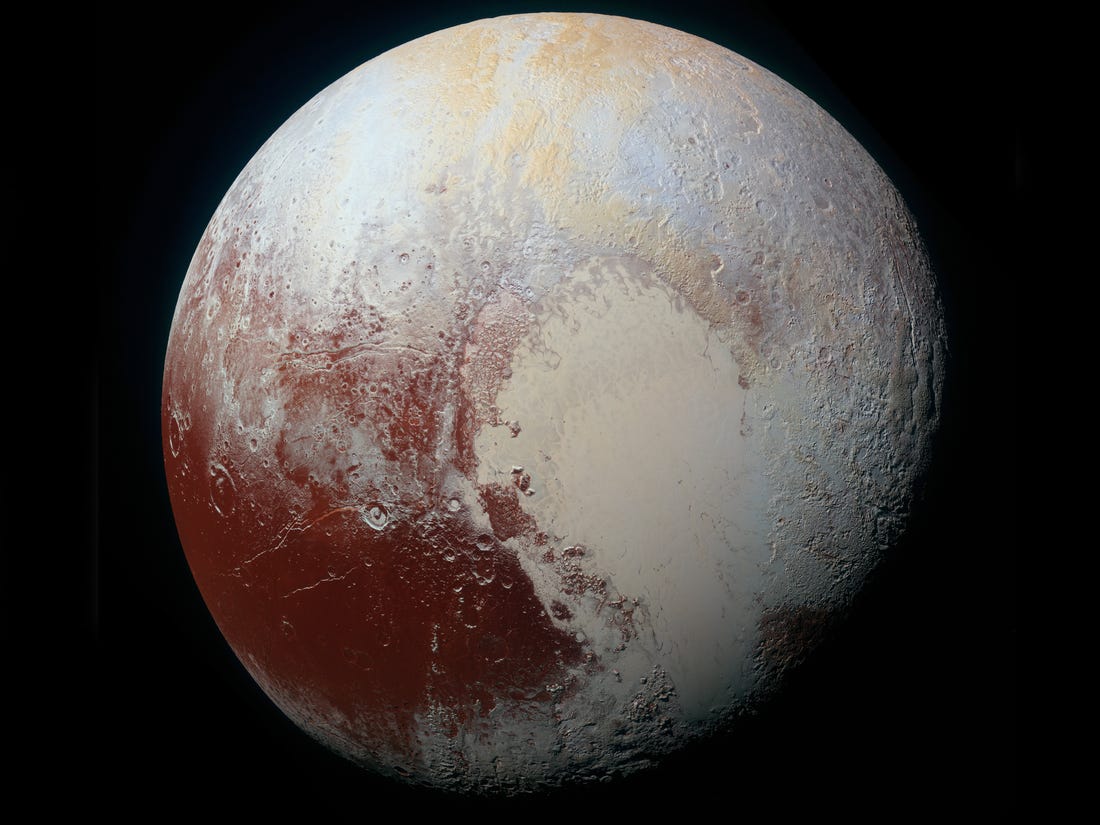
Contrary to what Jerry Smith says in Rick and Morty, Pluto is not a planet. But why did Pluto lose this designation in 2006? The International Astronomical Union has 3 main criteria to determine what is a planet and what is not. These three criteria are: having an orbit around the sun, having sufficient mass to maintain a hydrostatic equilibrium (creating a round shape), and clearing out the space around its orbit. The main reason why Pluto is now considered a dwarf planet is because Pluto only meets two of the three criteria. While Pluto does orbit around the sun, and has enough mass to assume a spherical shape, it has not cleared out the space around its orbit. To clear out space around a planet, it must become gravitationally dominant. When a planet becomes gravitationally dominant in an area of space, it means that there are no other objects of comparable mass in the area other than a planet’s satellites. In Pluto’s case, there are objects in the Kuiper belt within Pluto’s vicinity called plutinos that are also comparable in mass. Because of the discovery of these plutinos, Pluto was downgraded to the status of dwarf planet.
Picture Source: Business Insider

Climate change is a topic that is dominating the country politically, but what is the actual science behind it? Our atmosphere is made up of a specific set of elements which block harmful radiation from reaching the Earth and trap other types of radiation to warm the planet (aka the greenhouse effect). This effect is essential for human life because it keeps the planet at a stable temperature so humans can survive. Global warming occurs when too many greenhouse gasses are present in the atmosphere, causing the Earth to trap too much heat and therefore become too warm. In recent years, the average temperatures across the planet have been steadily rising due to this effect.
Greenhouse gasses are emitted when companies burn fossil fuels to generate electricity. A key way to prevent a changing climate is to simply stop burning fossil fuels, but our government in the United States alongside other countries are actively encouraging this practice to continue. Through the use of subsidies and loans, the federal government is allowing big oil companies to continue to burn fossil fuels and harm our planet. This is due to the fact that these oil companies consistently lobby governments around the world using the huge amount of profit they make from selling oil.
How can we stop climate change? A key way to prevent global warming is to work towards a green economy. Through recent technological breakthroughs, the use of solar panels and wind turbines to generate electricity has become much more viable. These technologies are now much cheaper to produce and install when compared to building large oil refineries. They also have become much more efficient, as scientists and engineers have worked hard to find better ways to store and transfer the energy generated by these clean energy sources.
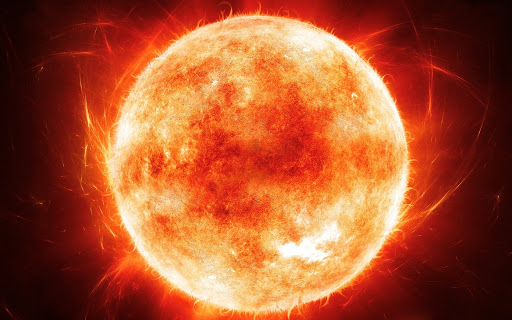
The Sun is the energy source of our universe. It provides the heat and light that allows life on Earth to survive. It is a molten hot ball that is many times more massive than the Earth. It is very interesting to think about how the Sun produces such high amounts of energy. The Sun (and other stars) produce their energy through the process of nuclear fusion. In stars the size of our sun, hydrogen atoms are turned into helium atoms through nuclear fusion. Some of the matter is not converted into helium and is instead turned into photons which radiate from the sun and provide heat and light to the planets in our solar system. When this light travels through the solar system and reaches Earth, the light is filtered through the ozone layer in the atmosphere which removes harmful ultraviolet radiation. In one second, the Sun fuses about 620 million metric tons of hydrogen in its core. The main difference between the sun and other much larger stars are the elements that they fuse. When larger stars fuse heavier elements there is more energy that is released which generates more heat and pressure.
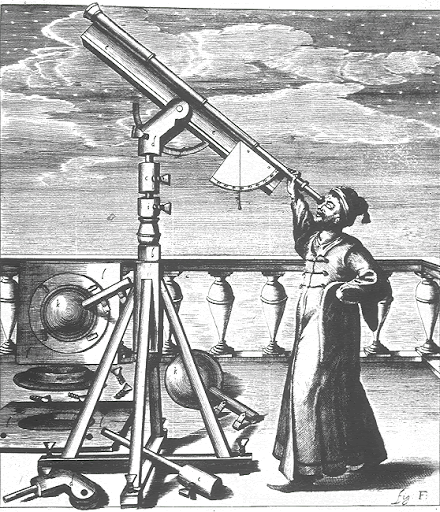
The telescope was first invented in the Netherlands in 1608. Its design quickly spread across Europe until it reached Galileo. Galileo spent years refining and redeveloping the telescope until it was much more powerful than before. He was able to observe many new astronomical phenomena such as the moons of Jupiter. For a while, Galileo had the best telescopes in the world, but many people began to build their own telescopes of similar quality. The technology continued to develop throughout Europe and led to many more astronomical discoveries such as the phases of Venus.
The next major innovation was the reflecting telescope, which used curved mirrors as well as lenses to magnify the images even more than before. This technology was used all the way into the 20th century. Eventually, scientists started to use other types of telescopes to collect more detailed information about the universe. Radio, infrared, ultraviolet, x-ray, and gamma ray telescopes were all invented in the mid 19th century and are used to collect information related to other types of non-visual light. While these telescopes don’t provide visual pictures of the phenomena in our universe, they provide scientists with crucial information about the chemical compositions of stars and planets. These telescopes were used to discover Cosmic Microwave Background Radiation, which was previously undetectable by visual light telescopes.
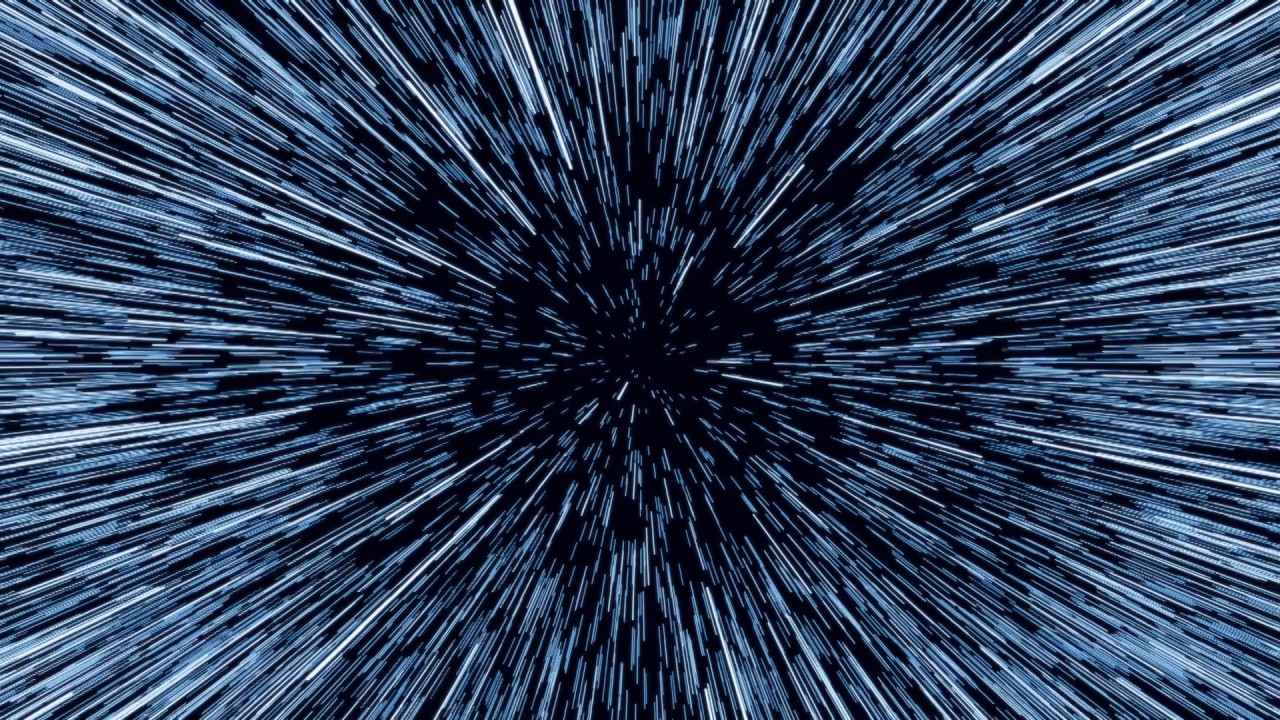
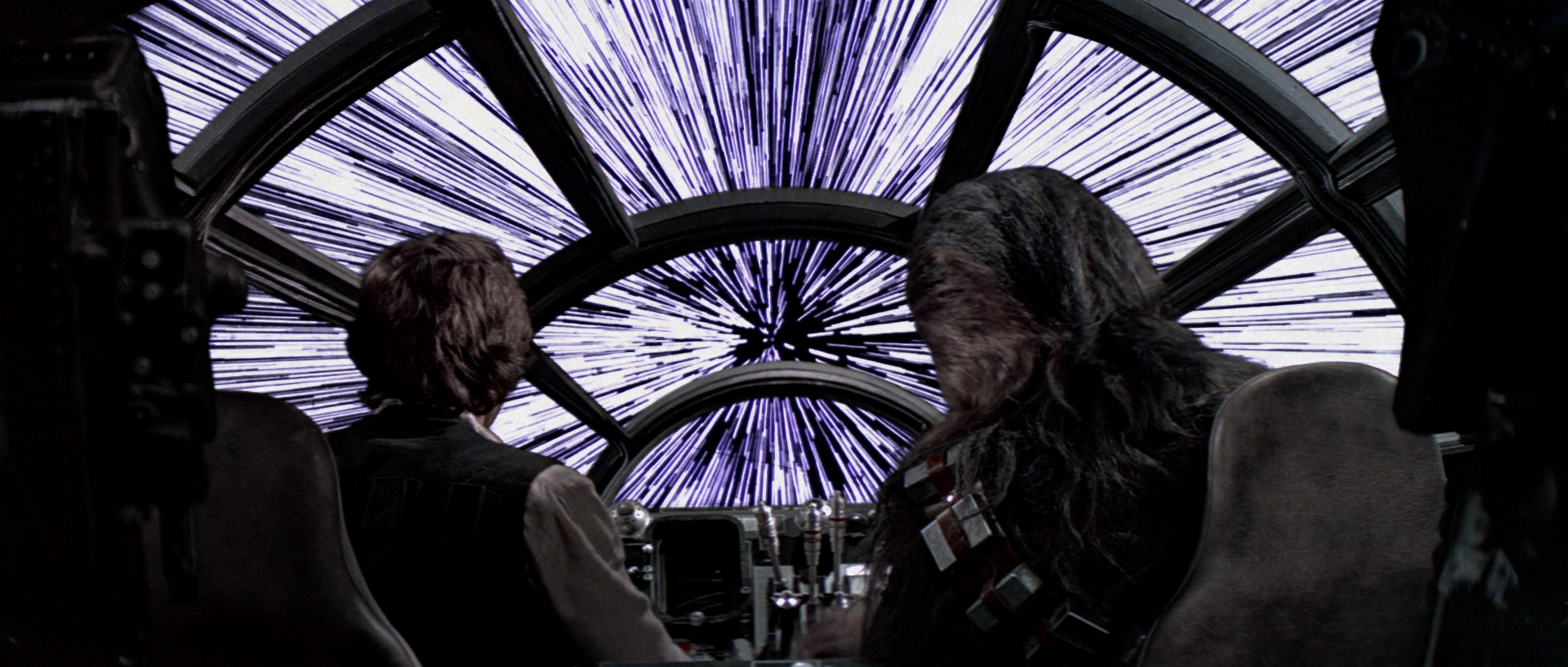
Light speed travel has been a staple of popular culture for years. I first became aware of the idea of light speed from watching Star Wars as a kid. But would we ever be able to actually travel at the speed of light? What would happen if we were able to achieve light speed travel?
First of all, traveling at the speed of light is most likely impossible. Because of Einstein’s famous equation E=mc^2, we know that energy and mass can be converted into each other. As the energy of an item increases because of its speed, its mass will also increase. Because of this, as an item gets closer to the speed of light, the item’s mass will approach infinity. Since its mass approaches infinity, the energy required to move it will also approach infinity, making it impossible to travel at the speed of light.
What would happen if we could get close to the speed of light? One thing that would change is our perception of time. If someone could travel at 90% of the speed of light, time for that person would be halved compared to someone observing from Earth. Another noticeable change would be your field of view. Someone traveling at close to the speed of light would experience serious tunnel vision due to a phenomenon known as Aberration. You would experience Aberration because the photons would appear to be coming from in front of you. You would also experience the Doppler Effect, where light waves crowd together, creating the blue color seen in a number of science fiction movies.
Even though the light speed travel from science fiction is impossible, traveling close to the speed of light would be a mind bending experience. For more in depth reading on the speed of light, check out this article on How Stuff Works.

I’m really interested in Mount Everest. This picture is good way to start the blog. The picture is from Britannica
This is an example post, originally published as part of Blogging University. Enroll in one of our ten programs, and start your blog right.
You’re going to publish a post today. Don’t worry about how your blog looks. Don’t worry if you haven’t given it a name yet, or you’re feeling overwhelmed. Just click the “New Post” button, and tell us why you’re here.
Why do this?
The post can be short or long, a personal intro to your life or a bloggy mission statement, a manifesto for the future or a simple outline of your the types of things you hope to publish.
To help you get started, here are a few questions:
You’re not locked into any of this; one of the wonderful things about blogs is how they constantly evolve as we learn, grow, and interact with one another — but it’s good to know where and why you started, and articulating your goals may just give you a few other post ideas.
Can’t think how to get started? Just write the first thing that pops into your head. Anne Lamott, author of a book on writing we love, says that you need to give yourself permission to write a “crappy first draft”. Anne makes a great point — just start writing, and worry about editing it later.
When you’re ready to publish, give your post three to five tags that describe your blog’s focus — writing, photography, fiction, parenting, food, cars, movies, sports, whatever. These tags will help others who care about your topics find you in the Reader. Make sure one of the tags is “zerotohero,” so other new bloggers can find you, too.

 Kyle's Astronomy Blog